Sales strategies can be overwhelming and unfamiliar to any business. Two methods that can greatly impact how your business grows and thrives are solution selling and consultative selling. Each method benefits businesses and the one you choose can help your business with long-term success.
Understanding Solution Selling and Consultative Selling
Approach:
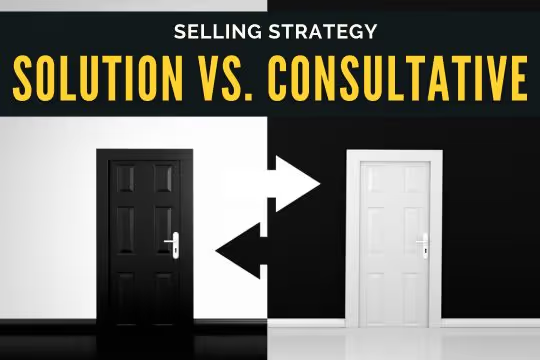
Solution Selling: Solution selling is a method centered around predefined products or services tailored to address the challenges or requirements discerned by prospective clients. It involves offering specific solutions to problems and presenting a ready-made fix. For instance, if a business identifies the need for improved communication tools, a solution seller might propose a package of communication software designed to meet that need directly without extensive consultation.
Consultative Selling: In contrast, consultative selling prioritizes establishing growing relationships through a comprehensive understanding of the client's needs before proposing suitable solutions. It entails a diagnostic process to thoroughly grasp the client's requirements and pain points. This approach is about having a consultative dialogue with a trusted advisor who listens attentively before offering tailored advice. For instance, if a business faces communication challenges but lacks clarity on the required solutions, a consultative seller might conduct in-depth discussions with key stakeholders to assess the underlying issues and then recommend personalized solutions based on their findings.
Focus:
Solution Selling: At the heart of solution selling lies a strategic approach that revolves around promoting products or services by highlighting their features and benefits tailored to meet clients' specific needs. This methodology places significant emphasis on showcasing a product's capabilities and showing how it can directly benefit the client. Through targeted presentations and demonstrations, solution sellers aim to clearly understand how the offered solution aligns with the client's requirements and objectives. By focusing on the tangible aspects of the product and its potential to address identified needs, solution-selling creates a compelling case for the client's investment.
Consultative Selling: Unlike the transactional nature of solution selling, consultative selling adopts a more holistic approach that prioritizes cultivating client relationships and comprehensive solutions tailored to address underlying pain points. At its core, consultative selling is not merely about pushing products but engaging with clients in a collaborative dialogue to gain a deeper understanding of their challenges, goals, and aspirations. By actively listening to the client's concerns and conducting thorough needs assessments, consultative sellers seek to uncover nuanced insights into the client's business environment and operational dynamics. Armed with this knowledge, a salesperson can then offer personalized recommendations and solutions beyond superficial product features to address the broader strategic objectives of the client's organization.
The Methodology of Solution Selling and Consultative Selling
Solution selling is a sales method deeply entrenched in a structured sales process designed to guide prospects through a predetermined path toward product acquisition. This methodical approach typically involves a series of distinct steps meticulously orchestrated to lead the client from initial contact to final purchase.
The journey begins with identifying potential leads, where sales professionals leverage various strategies to identify and qualify prospects who may need the offered product or service. Once qualified leads are identified, the next step involves compellingly presenting the product or service, highlighting its features, benefits, and value proposition. This presentation phase aims to demonstrate how the product can directly address the client's specific pain points or challenges, positioning it as a viable solution.
As the sales process unfolds, solution sellers anticipate and address potential objections raised by the client, employing persuasive techniques and providing reassurance to overcome any hesitations or reservations. This phase requires a keen understanding of the client's concerns and objections beforehand and effective communication skills to navigate potential roadblocks and objections successfully.
Ultimately, the culmination of the solution-selling process lies in closing the sale, where sales professionals utilize various closing techniques to secure a commitment from the client and finalize the transaction. This final step often involves negotiation, pricing discussions, and agreement on terms and conditions, culminating in the client's successful acquisition of the product or service.
In stark contrast to the structured approach of solution selling, consultative selling thrives on fostering meaningful dialogues and nurturing long-term client relationships. At its core, consultative selling is not merely about selling a product but providing valuable insights, guidance, and solutions that genuinely benefit the client's business.
The important concept of active listening is central to the consultative selling approach, where sales professionals attentively listen to the client's needs, concerns, and aspirations without interruption or preconceived notions. By truly understanding the client's unique challenges and objectives, sales professionals can ask probing questions to uncover deeper insights and gain a comprehensive understanding of the client's business environment.
This understanding allows consultative sellers to collaborate with clients to co-create tailored solutions that address their specific needs and objectives. This collaborative approach involves engaging in open-ended inquiries, encouraging clients to articulate their goals and preferences freely, and providing expert guidance and advice based on a thorough analysis of the client's requirements.
Moreover, consultative selling prioritizes establishing long-term relationships built on trust, integrity, and mutual respect. Relationship building is also one of the top sales tips to close business with consultative selling. By serving as trusted advisors when considering solution selling vs consultative selling, consultative sellers aim to become valued partners who contribute to the client's success over the long term.
The Pertinence of Solution Selling or Consultative Selling to Your Business's Success
How you establish connections and secure deals is pivotal to your success. Recognizing the differences between solution selling and consultative selling holds profound significance for the following reasons:
Building Trust: Consultative selling fosters trust-based relationships with clients, showcasing a genuine commitment to understanding their needs and delivering tailored solutions. It's about becoming a trusted advisor rather than just a salesperson.
Closing Deals: By pinpointing and addressing clients' pain points, consultative selling amplifies the likelihood of deal closure, underscoring a profound grasp of their challenges and a proactive approach toward resolution. It's about demonstrating value and relevance to the client's specific situation.
Mastering Consultative Selling: Key Strategies
Pose Open-Ended Queries: Cultivate substantive dialogues by posing open-ended questions, encouraging clients to articulate their challenges and aspirations, fostering deeper engagement and rapport. This allows you to uncover more about the client's needs and motivations.
Active Listening: Demonstrate attentive listening skills to discern clients' underlying concerns, aligning your offerings more effectively with their evolving requirements. Listening actively helps you understand the client's perspective and tailor your approach accordingly.
Offer Tailored Solutions: Shift the focus from product-centric promotion to assuming the role of a trusted advisor, offering bespoke solutions meticulously tailored to clients' unique needs and aspirations. This involves customizing your offerings to address the client's specific pain points and goals, which is one of the differences between solutions selling vs consultative selling.
Seizing Opportunities for Business Growth
Regardless of which selling method you decide to use, it should be something that your sales team and clients benefit from as a whole. If you are interested in SEO for small business websites, visit our website today for more information about attracting customers to your unique business.


.png)








.avif)